
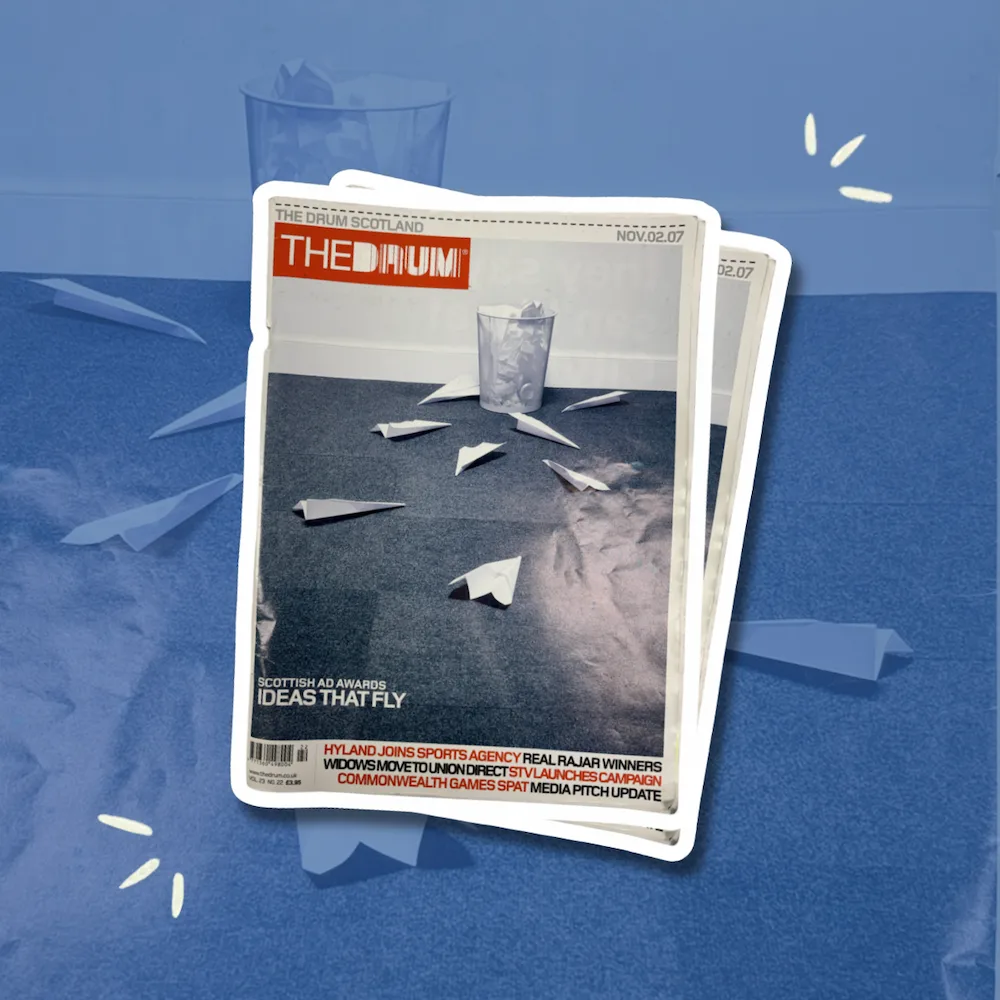

Last week a copy of The Drum from 2007 landed on my desk and flicking through it felt like opening a time capsule, a brilliant, funny, interesting one that I didn’t even have to dig out of the ground!
The copy was sexy, the ads were cheeky and the photos looked like something Prince Andrew was involved in. Some were genuinely brilliant and others had aged about as well as you might expect…
People often talk about the “good old days” of advertising, but what does that actually mean and who said it? Being born in the 90s, I can’t pretend that I know what those days were like, but I can definitely imagine it!
And not to sound too much like Carrie Bradshaw but I couldn’t help but wonder…. have we made it easier than ever to create marketing at speed and at volume, while making it harder than ever to create anything memorable?
AI has changed advertising and I’m not always sure it’s for the better
Artificial intelligence has transformed the marketing industry in a short space of time. Today, almost anyone can open an LLM like Claude or ChatGPT and produce a blog, social media post, creative concept or campaign plan within seconds. The barrier to entry has never been lower.
However, access to an LLM is not the same as mastery of a craft. Giving someone Adobe InDesign does not make them a designer. In the same way, asking an AI platform to produce an ad does not automatically make someone a marketer. One of the biggest dangers posed by AI is those who accept its first response as the finished product.
When thousands of people enter similar prompts in the same LLMs and use the results with minimal intervention, everything starts to look the same, sound the same and feel the same. The same phrases and structures appear, and everything starts to feel flat and diluted. As a consumer, it doesn’t evoke any sort of feeling in you at all, and is that not what good advertising is all about?
LLMs have their place in any marketers tech stack, we use them to interrogate briefs and our corresponding ideas and, crucially, work more efficiently, freeing up our time to do what we do best. When used correctly, they are an incredibly useful tool for performing admin tasks, or to critique our creative and push us harder.
From an agency or client point of view, expectations have increased enormously. A creative process that might once have taken several months can now theoretically happen in several days or a couple of weeks and that expectation is totally unachievable to produce work that agencies and clients should be really proud of, and more importantly, work that actually makes someone do something… Whether that is going out and buying a product, having a conversation with a friend of colleague about a brand, or even just thinking differently about something. After all, did we not all sign up for a job in marcomms because we wanted to ACTUALLY change consumers thoughts, attitudes and perceptions? I know I did.
The creative process is holy, spending time ideating, discussing, sticking ideas on the wall, stepping back, scrunching ideas up and throwing them away is a critical step in the creative process and one that simply cannot or should not be rushed. Expecting ideas at the drop of a hat is to the detriment of the industry.
Advertising regulation needs more than good intentions
At the same time as technology is opening advertising up, regulation is tearing us back down again, and fast!
Restrictions covering the advertising of identifiable High Fat, Salt and Sugar (HFSS) food and drink products came into force across the UK in January and in short, prohibits advertising any HFSS products on television and regulated on-demand services between 5:30am and 9:30pm, as well as all paid online advertising.
The intention behind these regulations is noble: to reduce children’s exposure to junk food and sugary drinks. However, good intentions do not automatically produce effective regulation. Food and drink businesses and their marketing teams now must understand whether a product falls within the HFSS scope, whether it can be shown, whether the brand itself can be promoted and whether an advert is permissible in one channel but prohibited in another.
Not only has the roll out of this been exceptionally poor with everyone looking to each other for help and advice on what we can and cannot now do, I can’t help but wonder if the UK Government fully took into consideration the implications this opaque legislation would have on both the marketing industry as a whole and, more importantly, businesses within the F&B industry who are now finding they cannot promote their product on many key channels? Will the UK Government foot the bill for a decline in sales as a result of less advertising? And will they recompense marketing agencies who have lost a vital revenue stream? I doubt it.
Are we creating a world of vanilla marketing?
There is nothing worse than being vanilla. Ever.
Other than heightened regulation and the rise of LLMs making advertising bland, the fear of being cancelled is another major constraint on creativity.
Earlier this year, a campaign we developed alongside our client was rejected by the Advertising Standards Authority because of a relatively mild innuendo. It was not hateful, dangerous or offensive. It was simply cheeky, funny and evoked a smile and a chuckle from everyone who saw it.
Humour relies on tension. Effective creative work frequently contains surprise, exaggeration, irreverence or a little discomfort. Remove all of that and we are left with advertising that is technically “acceptable” but emotionally empty. If an ad is designed to offend absolutely nobody, there is a reasonable chance it will move nobody either which brings me back to why we all entered this industry in the first place? Good advertising makes people FEEL something and isn’t simply forgettable.
Remember those ads in The Drum in 2007 I talked about above? What they all had in common was the fact they made you feel something: amusement, surprise, shock, even horror! Either way, they made an impact.
The answer is not to return blindly to 2007 and start photocopying our bare bums again for the sheer shock factor, but it’s to recognise that responsible advertising can still be brave and bold and slightly close to the bone and that’s okay. Brands should be allowed to have a personality and show that in whatever way feels right for them without the fear of being cancelled.
Final thoughts
While a lot remains unclear, what is clear is that AI, regulation and scrutiny are going nowhere. The businesses that succeed will be those that understand how to work within this new environment without allowing it to flatten their thinking.
Use AI, but do not outsource your judgement to it. Respect the rules, but do not automatically choose the safest and dullest possible interpretation. Listen to audiences but accept that meaningful creative work will not always produce a completely neutral response.
Do we really believe neutral ads will move the needle and inspire people to buy into a brand? I think not. Advertising does not have to be offensive to be effective, but it does have to make us feel something…and I’m talking about all the big feels: tugging at your heartstrings or giving you goosebumps. Be memorable.